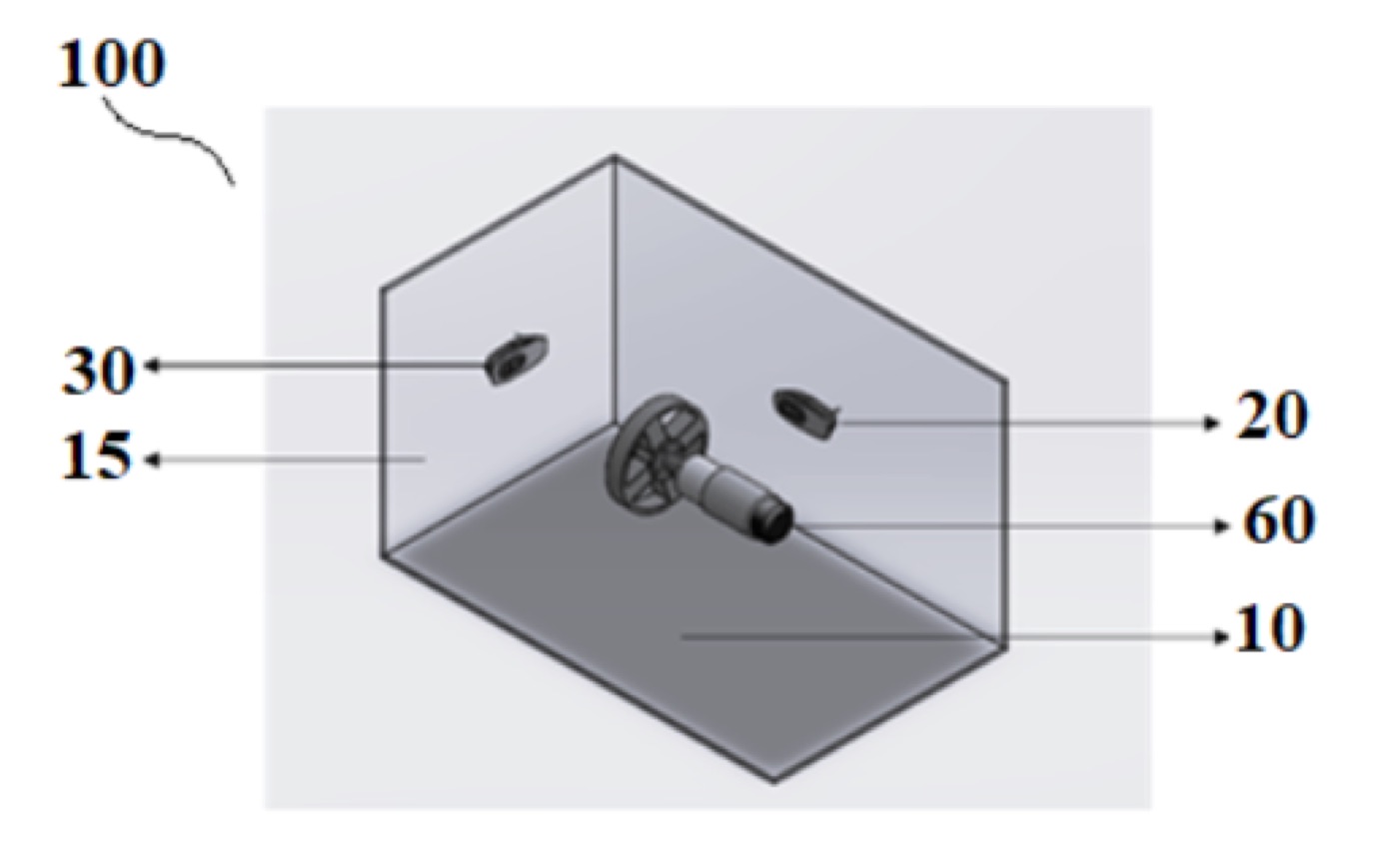
Error inspection of motor assembly misalignment
Inventor. A dual-axial camera system that finds component misalignment across assembly views, at 4× lower cost and 1.5× faster.
I'm Sankalp Chopkar, a robotics hardware and mechatronics engineer. I take robots from a first sketch to machines that walk, grip, fly and work outside the lab: the mechanisms, the electronics inside them, and the tools that connect them to software.
I trained in robotics and specialized in its mechanical side: the hardware that decides what a robot can actually do. Since 2018 I've designed, built and integrated robots for the field, the air, the lab, the Moon and the home. I own the whole path: CAD and fabrication, bringing compute, sensors, power and software up as one system, and staying with the robot through field trials, launches and the day-to-day of keeping a fleet running.
Mechanisms, structures and enclosures in SolidWorks, Creo and Catia, drawn to GD&T and designed for fabrication and assembly.
Motors, drivers, power, sensors and the boards between them. I wire, integrate and debug my own robots.
In-house fabrication and assembly. Two 40 kg bipedal, bimanual robots in two months; three 33%-scale bipeds before them.
Compute, sensors, power, actuators and software brought up as one machine: interfaces, harnessing, bring-up and cross-team debugging.
Robots out of the lab and into use: Spot and drone payloads in field trials, launch demos, and a five-robot fleet kept running day to day.
Accurate URDF assets and the tools that keep simulation matched to the robot, so ML policies transfer.
Master of Science in Robotic Systems Development (MRSD) · The Robotics Institute · May 2024
A systems-engineering master’s: taking a robot from requirements to a tested, working machine, as a team.
From a defence-lab gripper in Pune to humanoids in New York, with a master’s at Carnegie Mellon in between.
Starting with my current robot, then the field robots, lab machines and space tools before it. The 3D model is Voxel's real URDF; every other drawing is traced from my own CAD.
At Tuesday Labs I’m the founding mechatronics engineer on Voxel, a bipedal, bimanual home robot. Series-1 starts as a commercial off-the-shelf humanoid. I tore it down and rebuilt it into ours, then built the tools that keep its simulation honest.
I took the industrial design silhouette and engineered TEAD around it so it mounts on a commercial off-the-shelf humanoid. The eyes are LED matrices behind a light funnel, one cell per pixel, so every pixel reads crisp.
The pelvis, every leg structure and the foot shells, rebuilt to the Tuesday Labs design language around the stock actuators and load path. Six joints per leg, with the knee carrying the highest load in the robot.
Ghosted: the commercial robot we started from. Solid: what I redesigned. TEAD, the pelvis and the legs, plus the electronics inside: the boards that run the grippers, the eyes and audio, with actuators, grippers and custom electronics sourced from vendors across China and Europe.
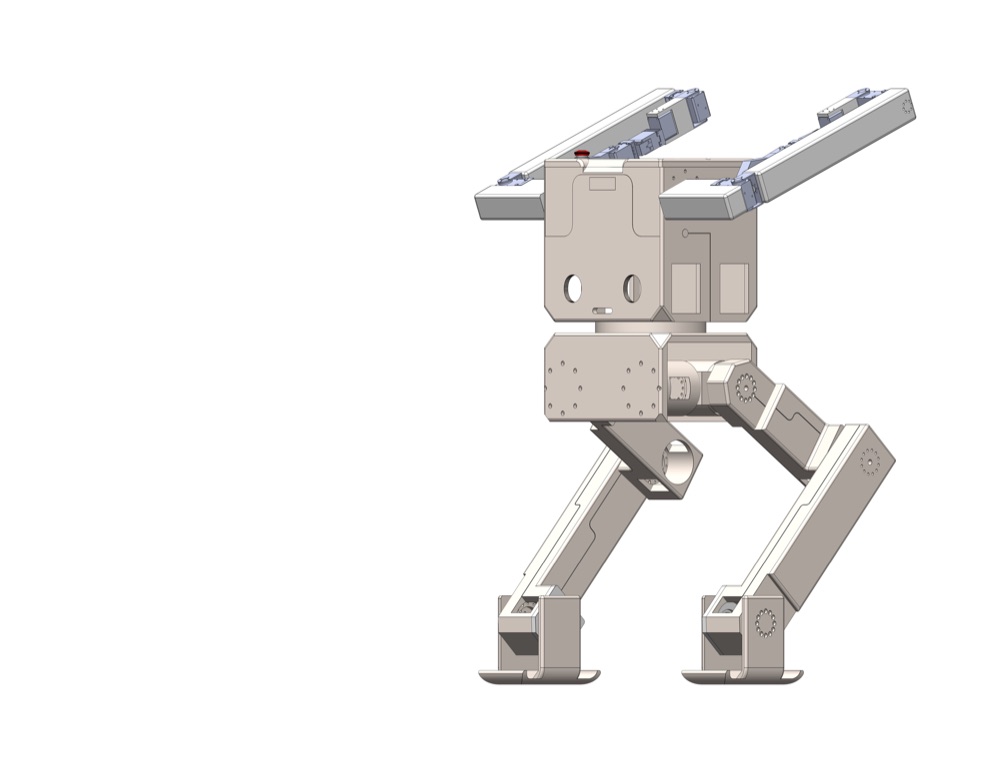
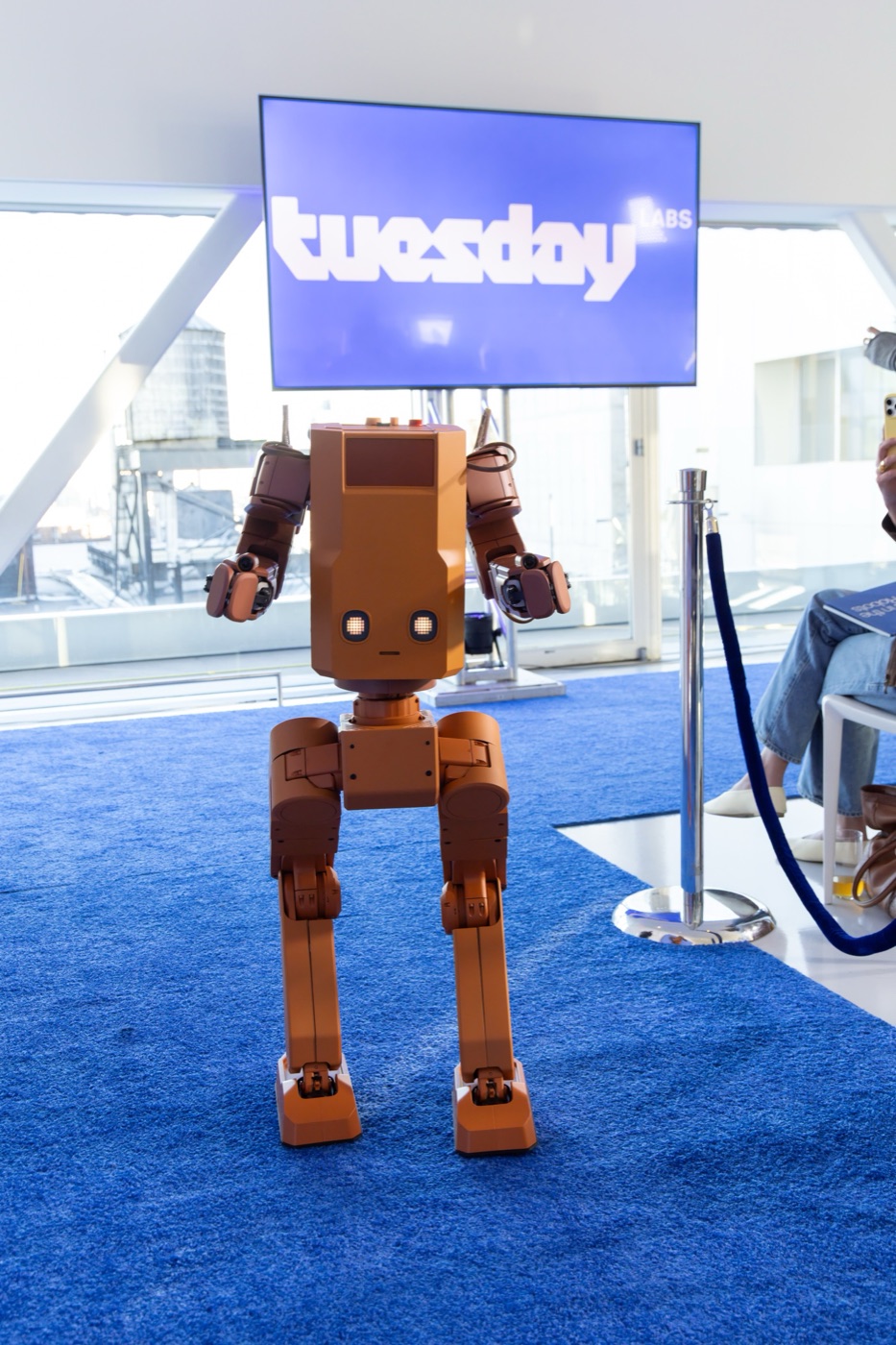
Each row isolates that subsystem on the live model. Adjacent parts stay as phantom lines.
Industrial-design silhouette engineered to mount on a commercial humanoid. Houses compute, audio and the control panel.
RealSense D435 and fisheye camera, located from the URDF so the simulated and real robot see the same view.
Dual 8×8 LED matrices behind a light funnel, one cell per pixel. 17 expressions from my firmware and Matrix Painter.
Rebuilt to carry the new upper body in the Tuesday Labs design language.
Every leg structure, hip to shank, around the stock actuators. 139 N·m knee limit, 300 mm from knee to ankle.
Reshaped to the Tuesday Labs design language while keeping the stock structure, so the load path and impact behaviour stay the same.
7-DOF arms with fully actuated wrists. Grippers and actuators sourced from vendors across China and Europe, with their electronics.
Motors and drivers, power, and the eye, audio and gripper boards: integrated, wired and debugged in-house.
The whole robot as a URDF with per-link mass, inertia and limits, exported by my tooling in 2 hours instead of a week.
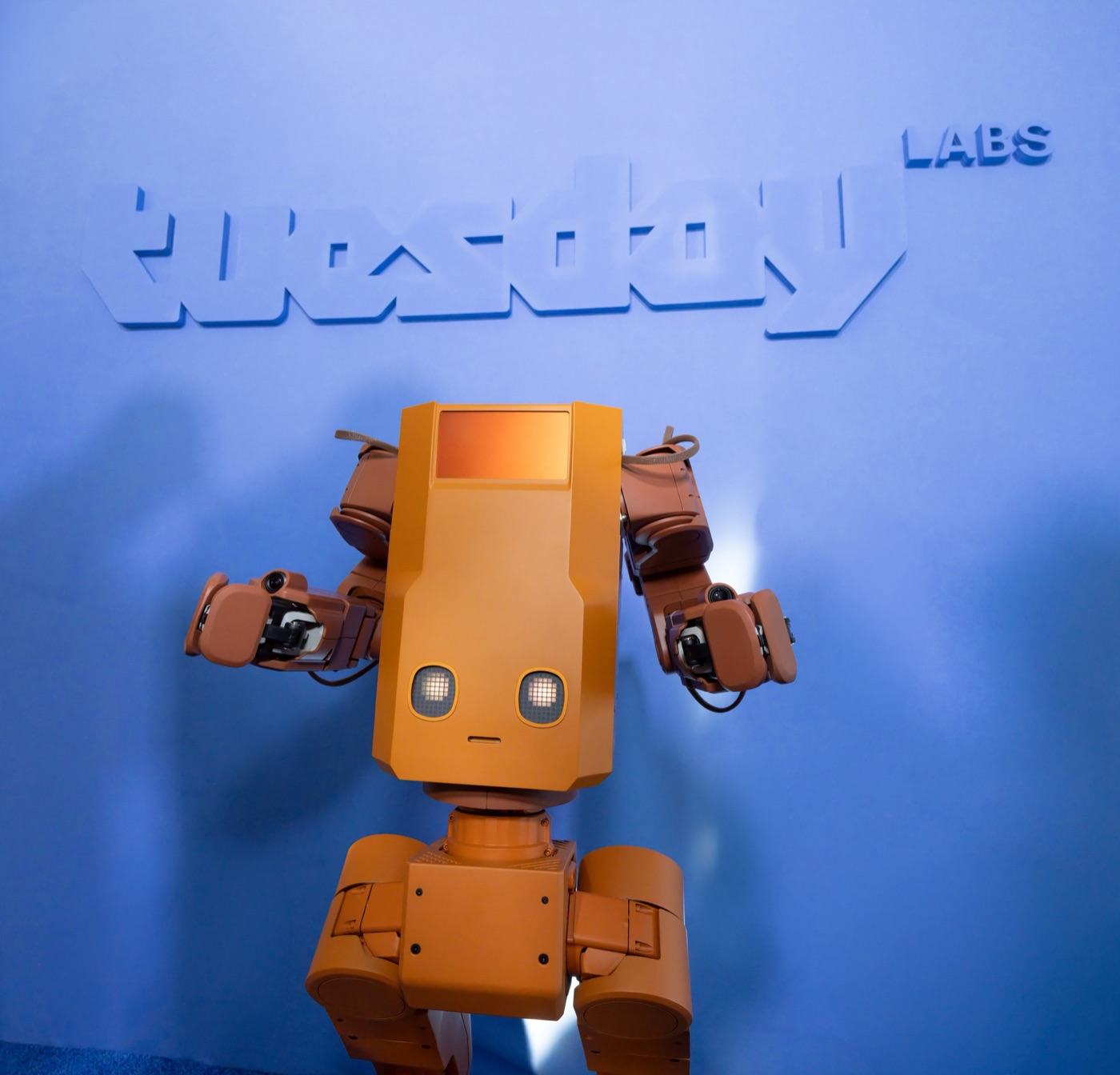
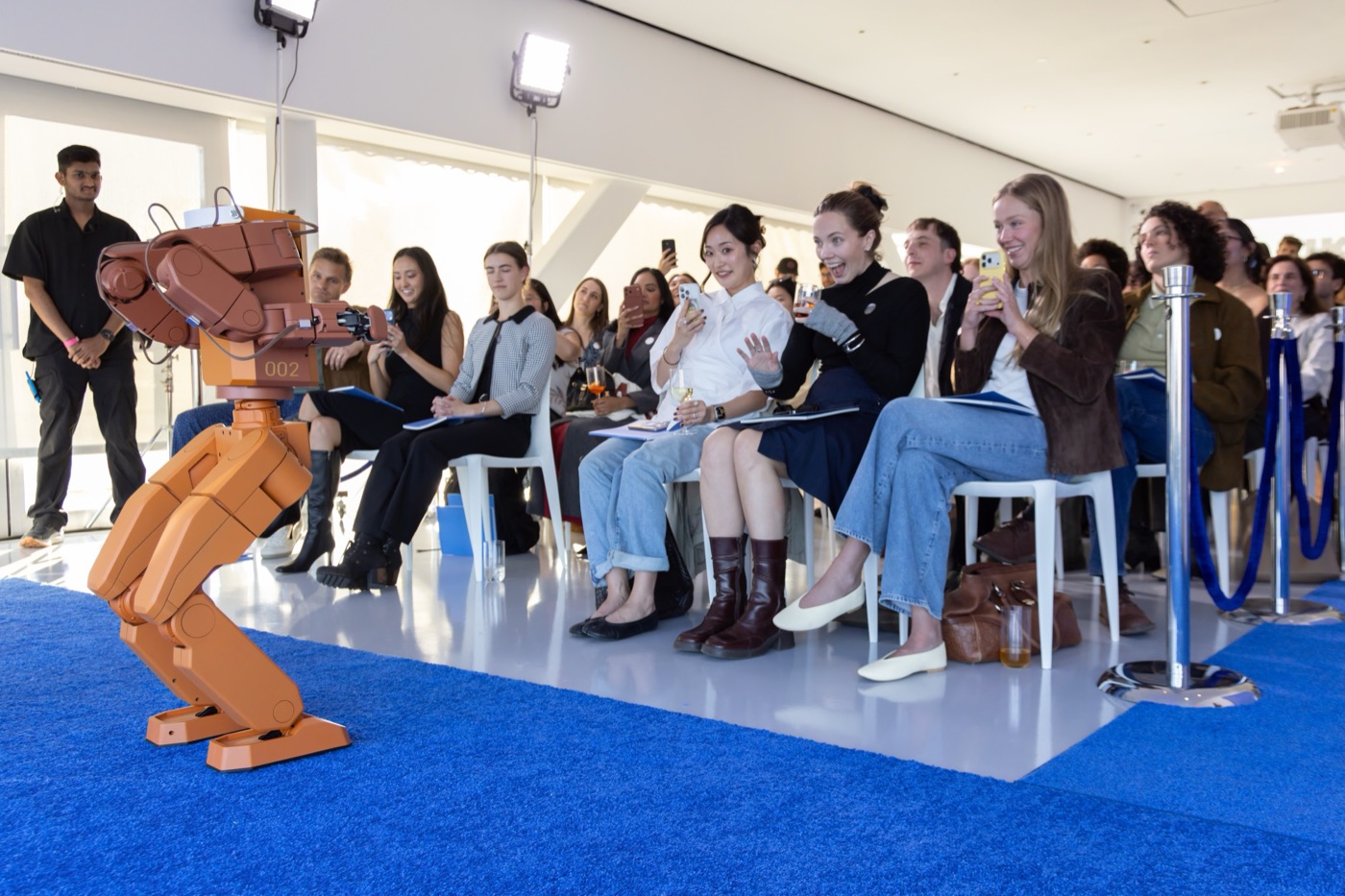
I keep a fleet of five robots ready for launches and demos, working with industrial design, ML and software.

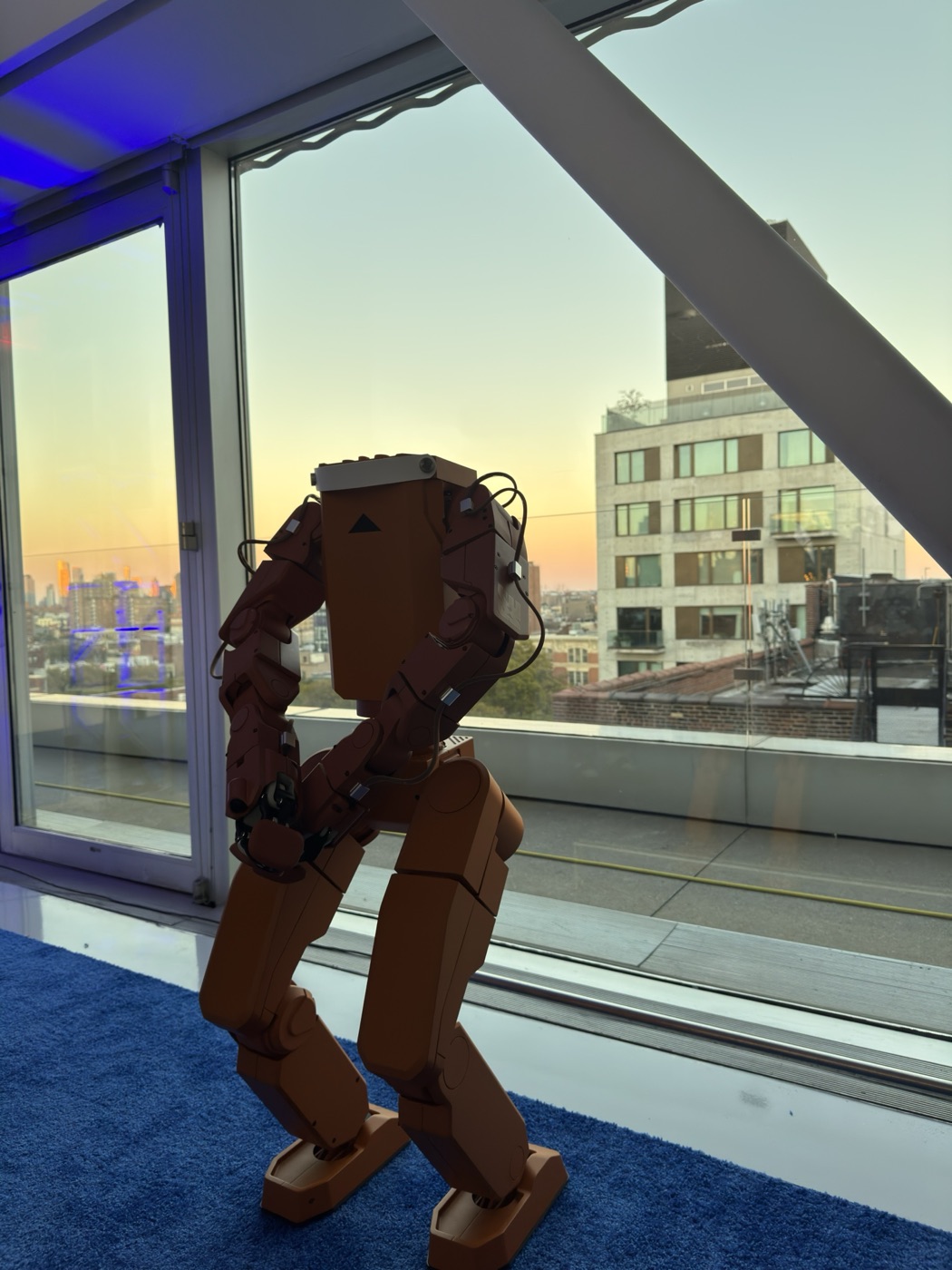
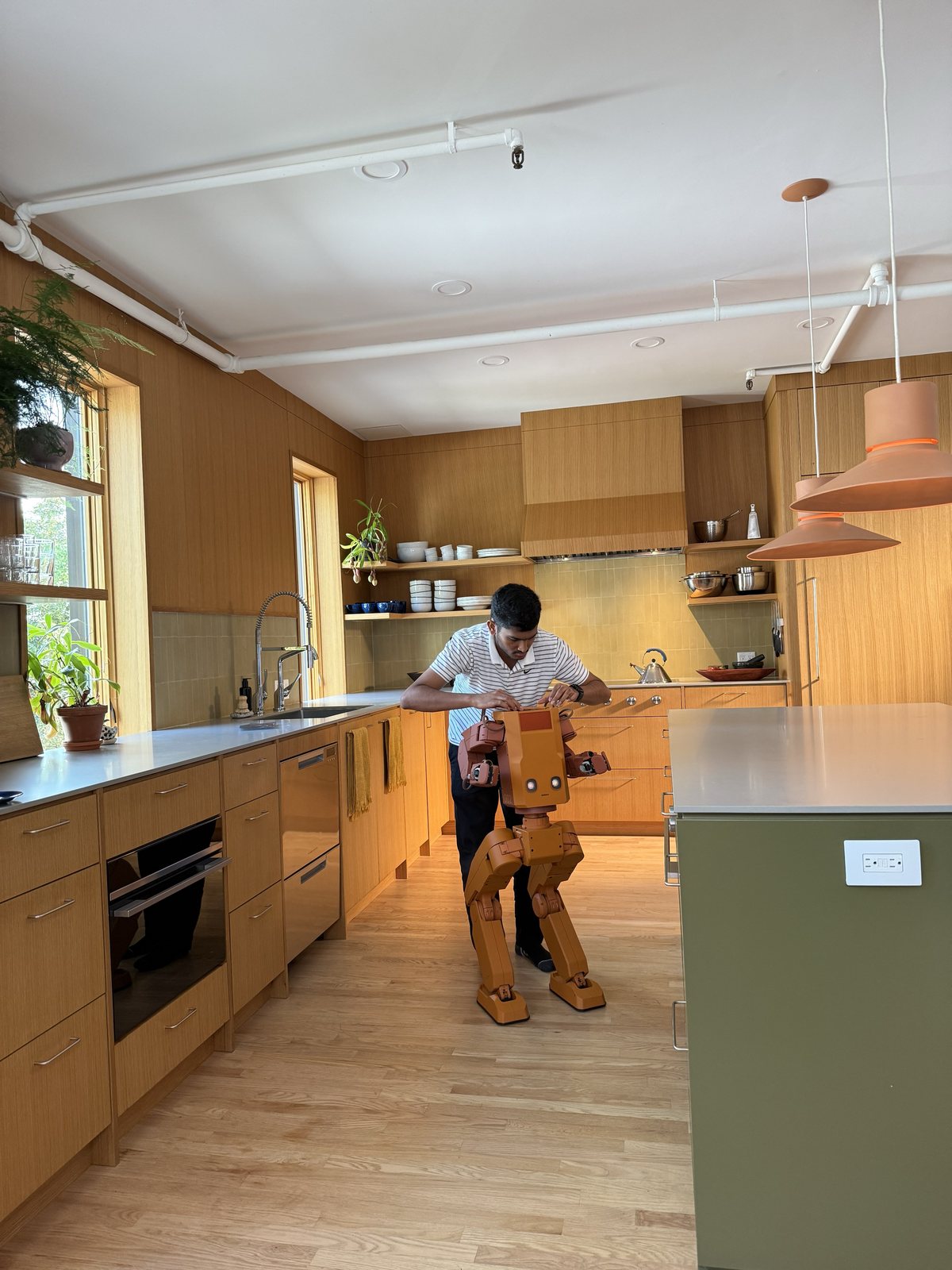
A policy trained in sim is only as good as the robot it was trained on. I generate high-fidelity URDF assets, with per-link mass, inertia and joint limits, and built the tools that keep the simulated Voxel matched to the physical one.
Asset turnaround after my export tooling, giving industrial design and hardware more room to iterate while ML trains on accurate models.
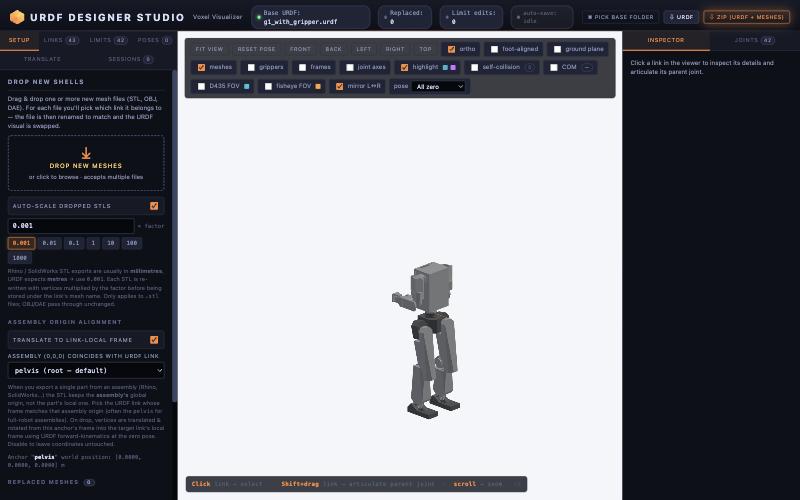
Rescales meshes while preserving origin and orientation, so parts drop into the URDF without re-registration.
Actuator power, torque and runtime tables from simulation logs, for sizing batteries and thermal limits.
Booking and repair board for the robot fleet, with a wall display and a QR encoder written from the spec. No database, no dependencies.
Hardware I designed and built at Carnegie Mellon, a biotech startup, a NASA program and an Indian defence lab. Each drawing is traced from my CAD; circles mark detail views.
Earlier projects, from a patent to a CubeSat.
Inventor. A dual-axial camera system that finds component misalignment across assembly views, at 4× lower cost and 1.5× faster.
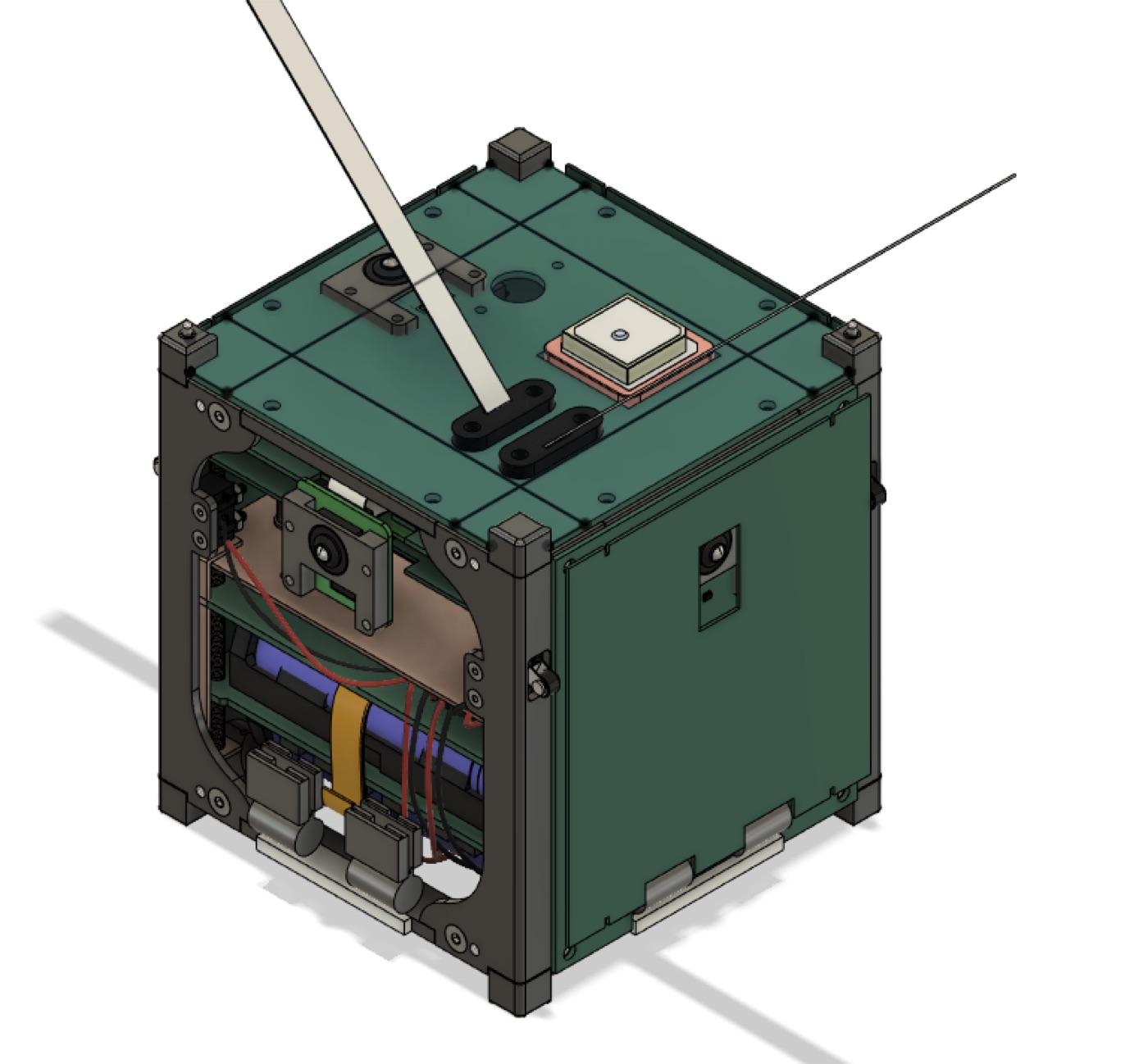
Satellite structure and deployable solar panel mechanism.
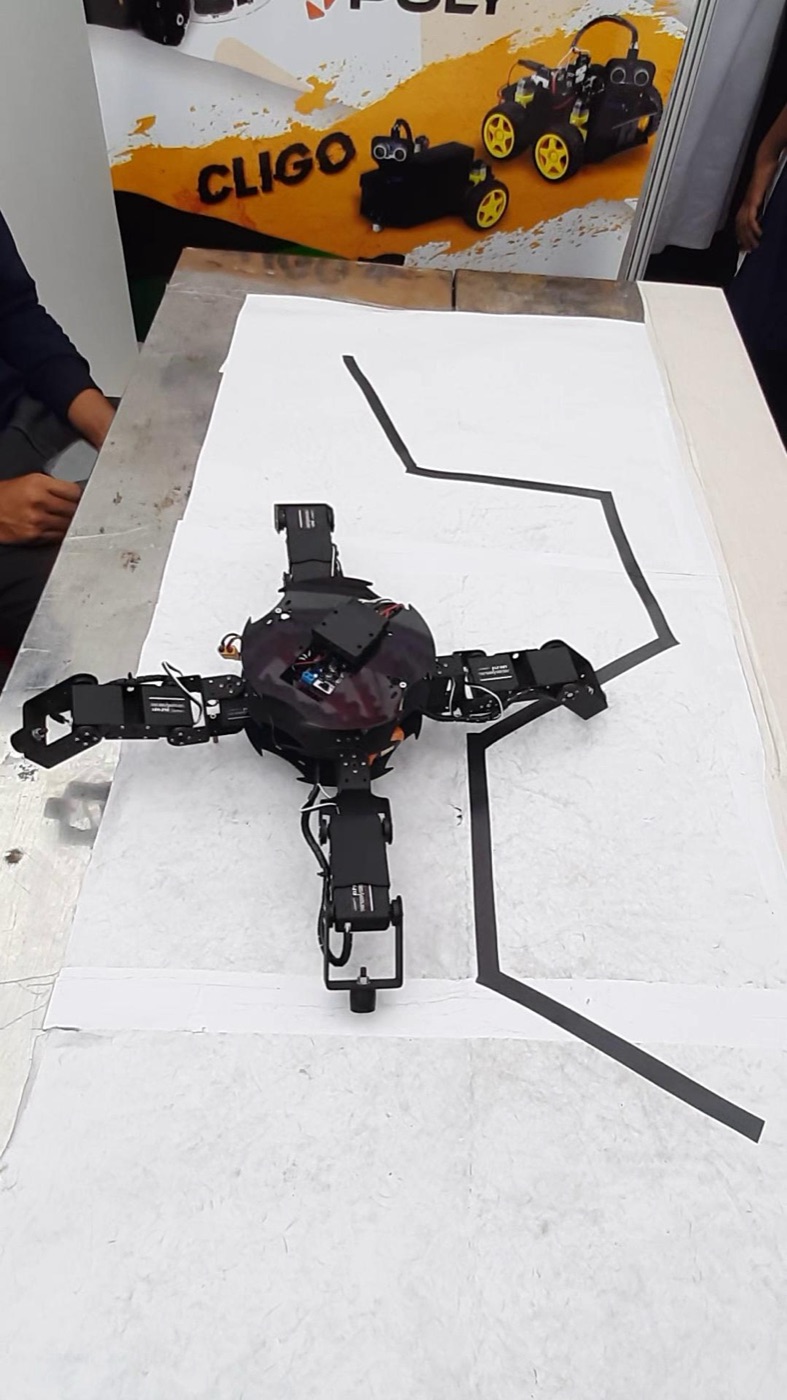
Four legs with three-point stability, KST servos and an Arduino Mega controller.
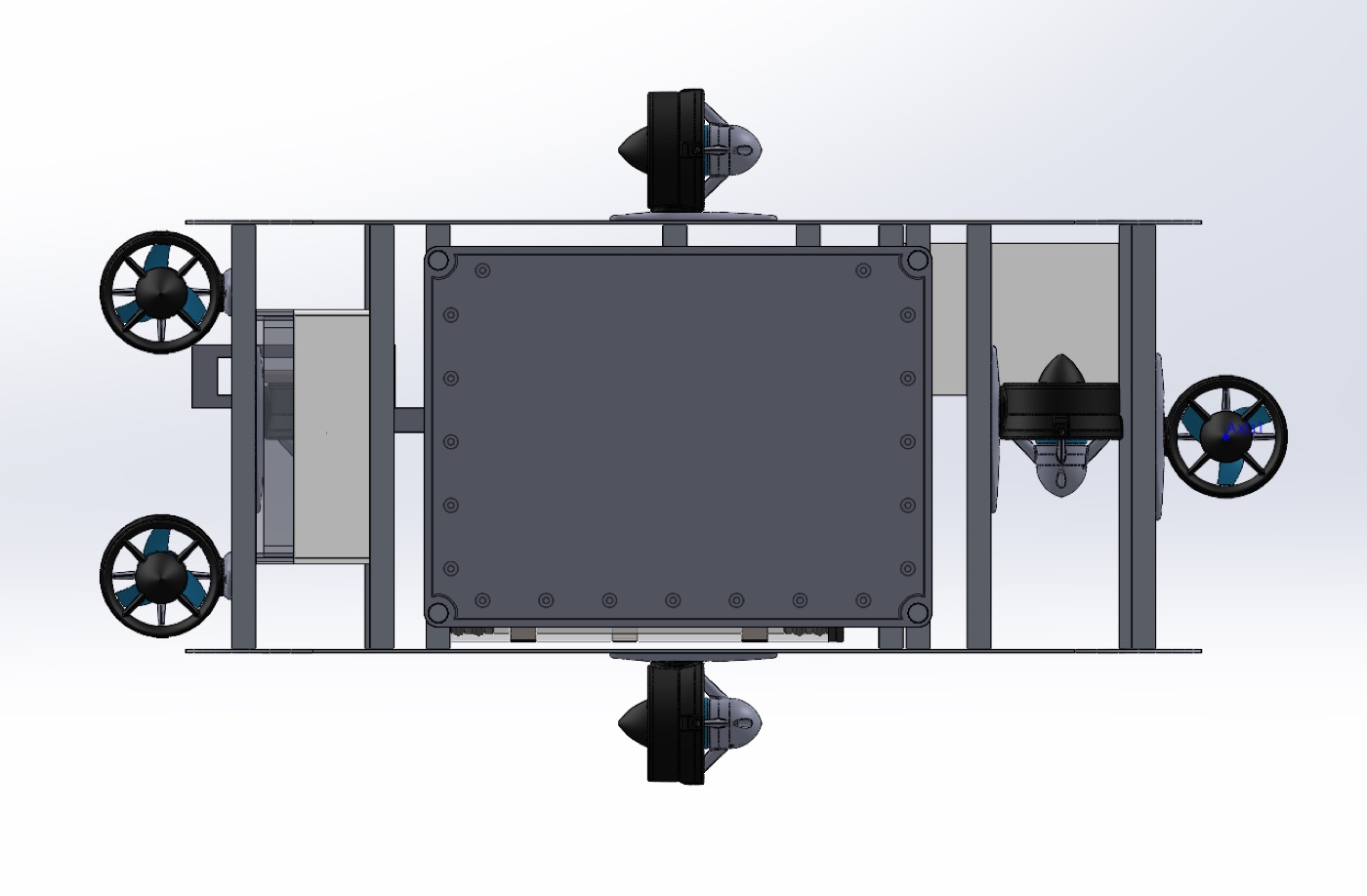
Underwater ROV design for the student team.
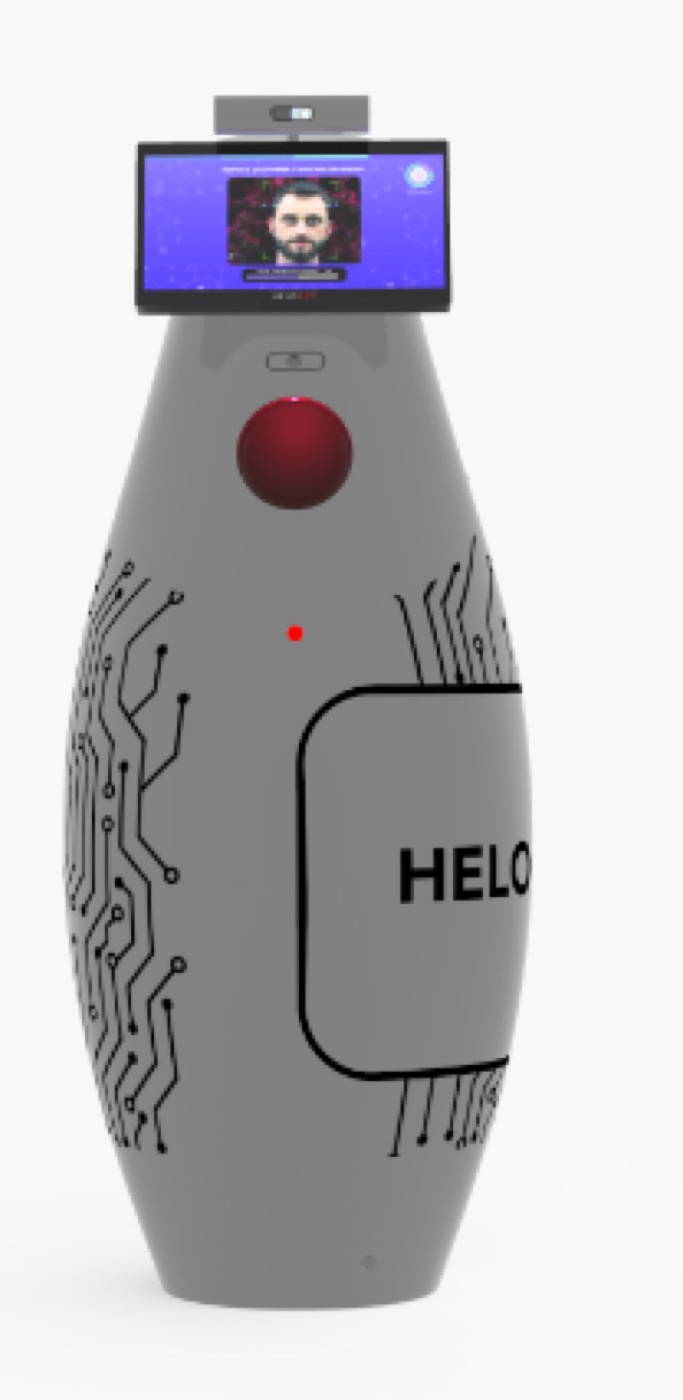
Enclosure and hardware for a self-service health kiosk.
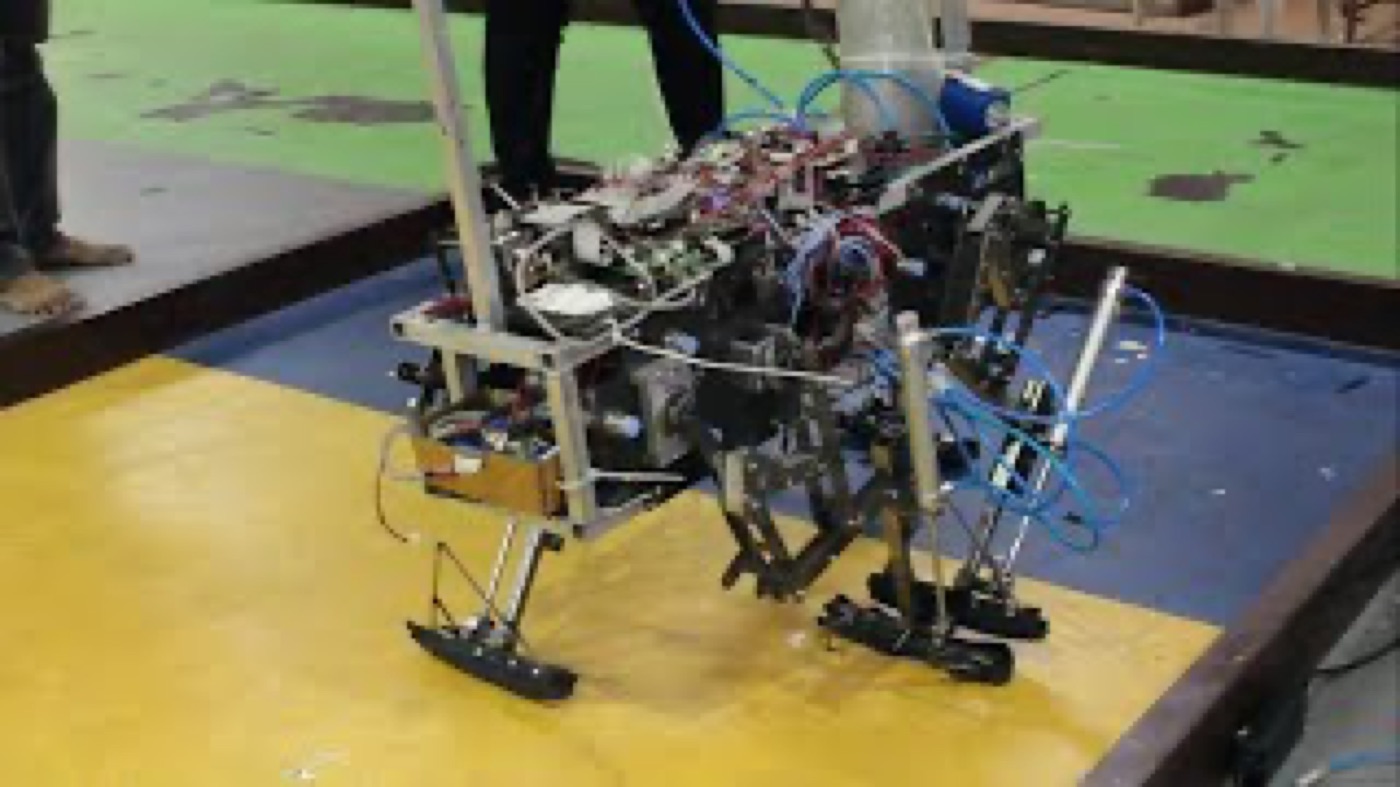
Early competition robots for ABU Robocon with the university team.
Short thoughts on building robots: what goes wrong, what I'd do again, and where hardware and software meet.
Most sim-to-real gaps I've chased started on the bench, not in the simulator. What an accurate robot asset actually contains, where the errors come from, and how we cut asset turnaround from a week to two hours.
Read →Robotics without hardware is a very good simulation. Torque, mass, heat, power and where you put the sensors decide what any controller or policy can ever do, and how fast you can learn.
Read →When a policy that walked beautifully in simulation stumbles on the real robot, the first suspects are usually the simulator, the reward or the domain randomization. In my experience the problem often started much earlier, on the bench, in the robot description file everyone trained on.
A reinforcement-learning policy never sees your robot. It sees the URDF: a tree of links and joints, each with a mass, a centre of mass, an inertia tensor, joint limits and collision shapes. Every one of those numbers is a claim about the physical machine. If the claims are wrong, the policy is trained on a different robot, and no amount of randomization fully closes a gap that was baked in on day one.
At Tuesday Labs we rebuild a commercial humanoid into Voxel: a new torso and head, a new pelvis, new leg structures, new electronics. Each change moves mass and moves the centre of mass. The ML team trains locomotion and expressive motion on the model of that robot, so the model has to change every time the hardware does.
Almost every error I've found had a mundane cause.
3D-printed parts are not solid. A printed shell's effective density depends on material, infill and walls. Modelling it as solid plastic overstates its mass; ignoring it understates. We assign an effective density per print material and compute shell mass from the CAD volume.
CAD forgets the things that weigh the most surprising amounts: wiring, connectors, fasteners, adhesives, cable slack. The CAD-derived model of a real robot almost always comes in light. In one refit the baseline model was more than 3 kg under the measured robot. We distribute that correction to the links that actually carry it rather than pretending it isn't there.
Changed parts keep their old properties. When you redesign a torso, the old inertia tensor quietly survives in the URDF unless someone owns updating it.
Mirrors and frames. Left and right parts that are mirrored in CAD, joint origins that drift between assemblies, a camera mount moved two centimetres in the last revision. Each one is small; together they are a different robot.
Accuracy that arrives a week late is accuracy nobody uses. Industrial design and hardware iterate quickly, and if the asset lags, ML trains on last month's robot. So I built tooling to make an accurate asset the default, not a project:
Together they took asset turnaround from about a week to about two hours. The real win is cultural: when updating the model is cheap, people do it every time.
Sim-to-real is a shared problem, but the hardware team can remove a whole class of it before training even starts. The most useful thing I can give an ML engineer is a model of the robot that is true.
You can do a lot of robotics without hardware: planning, perception, learning, simulation. It is real and valuable work. But until it runs on a machine, it is a very good simulation. Hardware is where the ideas meet torque limits, heat, batteries and a floor that is not quite flat.
Every controller and every policy works inside an envelope the hardware defines. Peak and continuous torque, joint speed, mass and where it sits, stiffness and backlash, the range of each joint. On Voxel the knee is rated to 139 N·m. No amount of clever software makes it 160.
Sometimes the envelope shows up in places you don't expect. Voxel's eyes are two 8×8 LED panels. At full white those 128 LEDs would pull around 4 A, more than the panel wiring should carry, so the firmware caps brightness at 25%. The robot's expressions, a character decision, are shaped by a current limit, a hardware decision.
How fast a team learns depends on how fast it can try things on a real robot, and how much a failure costs. Before our full-size robots, I built three 33%-scale bipeds from scratch so the software team could test locomotion policies on hardware that was cheap to crash. When we needed full-size platforms, the bar was speed: two 40 kg bipedal, bimanual robots, designed, fabricated, assembled and wired in two months.
Speed also means knowing what not to build. Voxel Series-1 starts from a commercial humanoid. We kept the stock structure where it already worked, like the load-bearing core of the feet, and rebuilt everything that defined our robot around it: the head and torso, the pelvis, the legs, the foot shells and the electronics. That choice bought months.
Data is only as good as the instrument. On the GelSight skin probe, a load cell lets each capture happen at the same contact force, because a tactile image taken at a different force is a different measurement. In Magnify's sample-prep device, a heated chamber held to ±0.2 °C is the difference between a usable sample and a ruined one. On Spot and on drones, where a camera is mounted and how rigidly decides whether calibration survives the first field day.
A robot that works once is a demo. A fleet that works every day is a product. Supporting five robots through launches and demos taught me that serviceability is a design requirement: connectors you can reach, parts you can swap, a board you can debug without a teardown, and a shared record of what broke and why. Some of that is mechanical design. Some of it is a booking and repair board on a wall.
Nobody, and that's the point. The best robots I've worked on came from teams where hardware engineers thought about the policy, and ML engineers knew the gear ratio. Hardware says no a lot. A good hardware engineer's job is to say it early, with numbers, and then find the yes.
Design a robot from real parts, then drive it as far as you can in Endless run, or test it on missions from my own work: thresholds, ramps, gaps, a fetch run and lunar regolith. Every part costs money and mass, actuators trade torque for speed, and every failed test tells you why.
Water, courts, new places and a camera, usually in that order.
Laps are where I think through design problems.
Fast, tactical and humbling. My favourite racket sport.
Anything with a ball and a scoreboard, on the court or on a screen.
New cities, new food, new ways people build things.
Street, landscape and the occasional robot portrait.
The view from 120 m. A gallery is coming here soon.
Robotics hardware and mechatronics engineer. Design, system integration and deployment.